

Aquascaping is the art of aesthetically arranging elements (aquatic plants, rocks, stones, cavities and driftwood) aimed at creating a natural aquatic environment in the aquarium. In other words, we can call it a hobby of underwater gardening. But it is a very sophisticated hobby considering many factors.
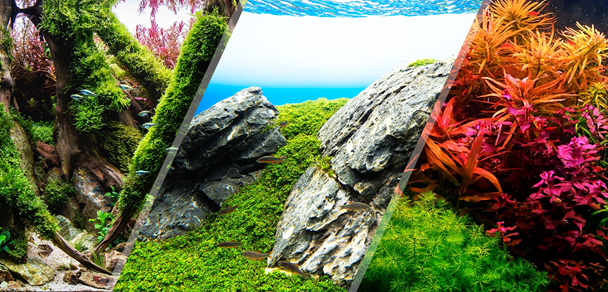
The art of aquascaping began with the Dutch style, which pioneered lush garden-style tanks in the 1930s. Over time, various styles and approaches have emerged. Basically, there are three main styles in modern aquascaping: Nature style aquarium, Iwagumi style aquarium and Dutch style aquarium. Each style has its own characteristics and characters.
Nature Style Aquarium – a variety of themes and sub-styles are used. Basic Nature-style design concepts were introduced by Japanese aquarist Takashi Amano in the 90s and have become widely popular over the years, influencing the future of young aquascaping hobbyists.
This aquascaping style represents the style based on hardscaping design (hardscaping refers to the surrounding hard landscaping materials such as stones, rocks, driftwood when designing a landscape according to the purpose). Rocks, stones and driftwood are mixed with aquatic plants to create an underwater replica of a particular terrestrial landscape. Mountains, tropical rainforests, lush slopes, valleys, canyons, islands and many other natural landscape scenes can be designed in the Nature Aquarium.
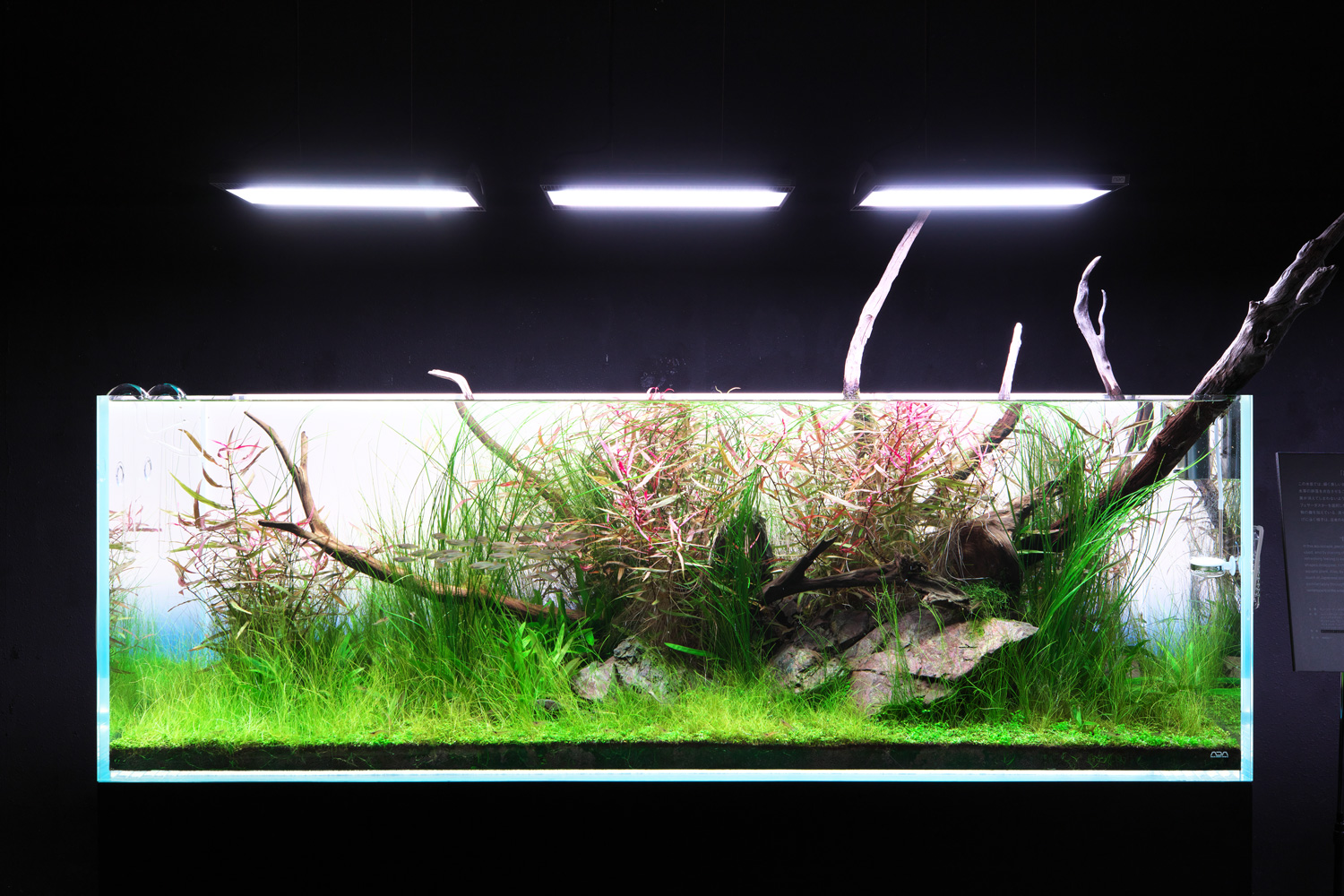
Although the overall look of nature-style aquarium landscaping seems unplanned, rather random and undesigned, the truth is that achieving this type of layout requires a lot of intricate work. However, most aquarists plan their Nature-style aquarium before getting their hands wet. It greatly reduces the burden of pen and paper when trying to visualize the design of your waterscape.
Selection of fish for nature style aquascape is as important as selection of hardscape and aquatic plants. Fish that complement the theme of your tank should be chosen. Their behavior and lifestyle should be taken into account. Their size, shape and color should also be carefully considered. If the fish are too large, they can disrupt the designed pattern. If it likes to eat aquatic plants, this is definitely not desirable. Small fish that like to swim in groups should be the leaders. Tetras, Rasboras and some species of Danios are undoubtedly the most popular fish found in Nature-style aquariums today. Other wonderfully compatible species include: Barbs, Killifish, Gouramis, Angelfish, Discus, Guppys, Siamese fighting fish and Rainbowfish.
Diorama Tarzı Akvaryum –
Diorama is a design technique used to design a miniature scene or environment. Diorama is often used to imitate natural or artificial environments and is made using a variety of materials. Although it may be challenging to decide to show a view inside the aquarium and design it, it is a very popular aquarium design technique.
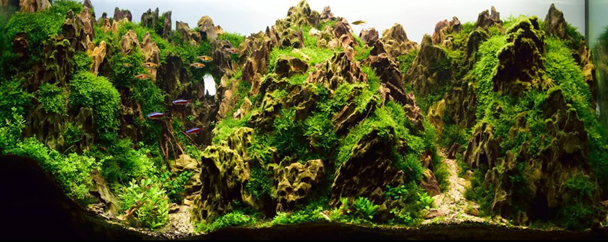
The Iwagumi Style Aquarium layout is one of the most challenging aquascaping styles on the market. Although it may seem simple to do at first glance, using only 1 or 2 types of slow-growing plants can create algae problems from the very beginning. Developed by famous aquarist Takashi Amano in 1985, this style of aquascape not only represents a minimalist layout, but also reflects Japanese culture, spirituality, and love of beauty and simplicity. Nowadays some of the Iwagumi tanks still exist at the ADA Gallery in Japan and fascinate thousands of visitors every year.
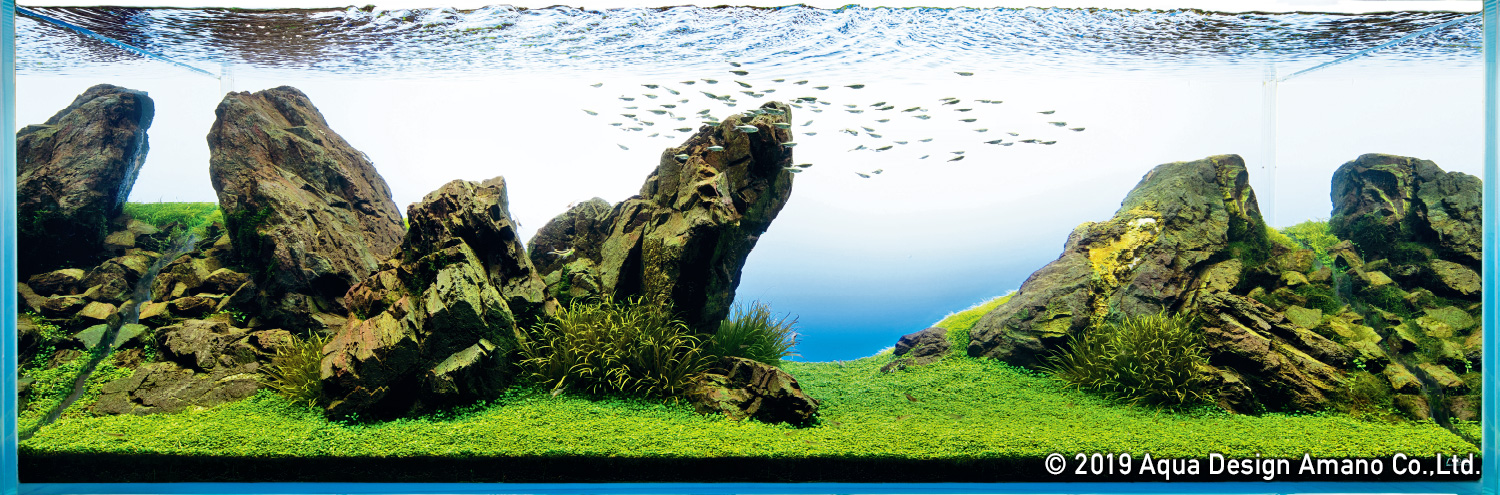
The term Iwagumi literally means “rock formation” in Japanese and thus refers to a design in which stones play a leading role. Rocks provide the “bony” structure of the waterscape. Traditionally, it is a design consisting of three main stones, one large and two small. The most difficult task when it comes to the Iwagumi aquascaping style is to achieve this harmony and integrity with simplicity. Iwagumi is not just about picking up a few stones, but about placing them in a fluid, natural and spacious way. In the end, they are designed to be in close relationship with each other and with other complements of the landscape.
When it comes to plants for an Iwagumi style aquarium, there are a limited number of plants that can be used. The reason for this, of course, is that the plants do not cover the stones and the aquarium should be more spacious and focus on minimalist. The most popular are small carpet plants such as:
- Hemianthus callitrichoides Cuba
- Eleocharis acicularis ve parvula
- Glossostigma elatinoides
- Mikranthemum umbrosum Monte Carlo
- Utricularia graminifolia
The Iwagumi tank is characterized by simplicity, harmony and unity, so this fine line should not be forgotten, because it is important to maintain this feeling when we add fish to our tank. The aim of the fish should be to increase the sense of tranquility of the aquarium landscape through their fluid movements. Small fish such as Tetra or Rasbora groups should be targeted. In particular, the following species are ideal for Iwagumi-style aquascaping:
- Hyphessobrycon herbertaxelrodi
- Paracheirodon axelrodi
- Hemigrammus rhodostomus
- Hemigrammus erythrozonus
- Hemigrammus bleheri
- Trigonostigma heteromorpha
All these species are preferred due to their calm and gentle behavior. You should always make sure that there are at least 10-12 of them in groups.
Dutch style aquarium – the oldest style of planted tanks, popularized in the Netherlands in the 1930s by the implementation of NBAT – Dutch Society for Aquarists.
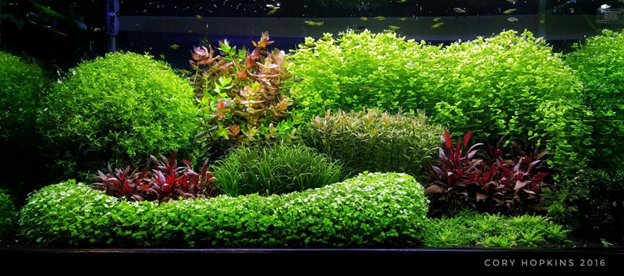
The Dutch Aquarium style does not use driftwood, rocks, and other hardscape landscaping materials. The main focus is on the growth and regulation of aquatic plants. Traditionally, these types of aquariums have been compared to underwater gardens. However, unlike the Nature style aquarium, the Dutch style does not intend the aquascapes to resemble a specific scene from nature. The complex placement and grouping of plants complement each other in shape and color, leading to deep perspective within the aquarium.
The most important requirement for aquascaper hobbyists who want to design a Dutch-style aquarium is that they have comprehensive knowledge of aquatic plants. Since they represent the main materials used in Dutch aquarium landscaping, it is crucial to know how to plant, group and combine them to ensure that the final arrangement is aesthetically pleasing to the eye. The most spectacular Dutch planted aquariums are characterized by extreme density, rich contrast, and subtle use of color and texture.
. The focal point of this style of aquarium is often emphasized by using red or large plants. Considering that Dutch style aquariums are very busy, it is very important to maintain a sense of harmony and simplicity. Plants are grown in groups and contrast is achieved through careful use of color variation, leaf height and texture.
Recommended root crops are often the priority for a Dutch aquarium setup because they have a fast growth rate and a wide range of leaf colors and shapes. Three plant species should be sufficient to provide good color contrast.
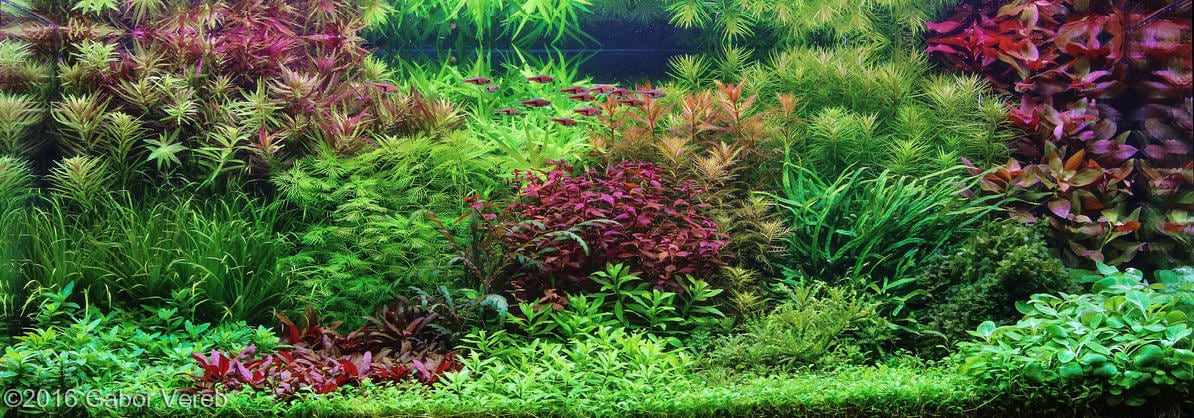
Some of the plant types most commonly used in Dutch planted aquariums include:
- Saurus cernuus ve Lobelia cardinalis
- Hygrophila corymbosa and Limnophila aquatica
- Plants of the Cryptocoryne species
- Alternanthera reineckii, Ammania, Rotala (renk vurguları için odak noktaları oluşturur)
- Java moss
In the Dutch style aquarium the role of the fish is more secondary, but still very important. Every third of the tank should be filled with fish, highlighting the beauty of each area. Larger fish like Congo tetra or Angelfish are always a good choice.
Equipment:
You can use the same equipment in a Dutch planted aquarium as in a traditional aquarium:
- Lighting – standard fluorescent lamps or LED installations
- Filtration systems – canister filters or hoppers
- Addition of CO2 – injected in the range of 15 to 20 ppm
- Substrate system – clay or laterite, small-sized gravel or Aquasoil
- Fertilizers – regular doses of micro and macro liquids
Unlike nature-style aquascapes, Dutch-style planted aquariums require frequent plant pruning, which can be annoying. However, if it is done correctly and skillfully, a clean, orderly, aesthetically pleasing foreground-background design can be achieved. Daily Dutch aquascape maintenance requires: adding liquid fertilizer, checking tank temperature and CO2 level, feeding fish, and removing floating leaves and other debris.
The following actions are recommended weekly: cleaning the aquarium glass, dislodging debris accumulated around plants and substrate by hand shaking, cleaning filters, pruning and replanting (if necessary), water change (at least 50%).
There is currently only one competition with a special category dedicated to Dutch-style aquariums, the AGA International Aquarium Landscaping Competition. If you would like to enter the competition with your own DutchAquascape, there are some important things to keep in mind regarding how the judges verify your tank:
- Health of aquatic plants and fish
- Water parameters (optimum temperature, appropriate phosphate and nitrate levels; hardness)
- Plant selection, color and contrast harmony
- Selection, compatibility and number of fish based on aquarium size and environmental conditions
- General design and layout
- Equipment installation (must be out of sight)
A person has endless possibilities on how to design a planted aquarium, the only limit is everyone’s creative potential.